

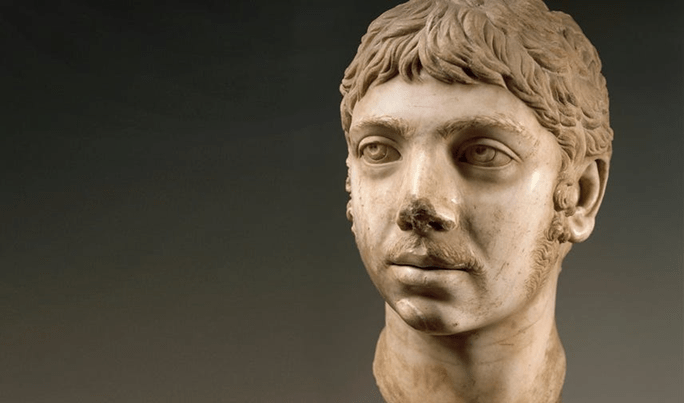
Have you ever stumbled upon a historical figure and wondered, “Who is this, and what did they do?” Well, let me introduce you to someone who fits that curious profile perfectly: Gaius Julius Alexion. Picture a world more than 2,000 years ago, where the winds of politics and religion intertwined like an intricate dance. This Syrian prince wasn’t just any ruler; he was a Roman client priest-king, a role that sounds like it’s straight out of a historical drama! Let’s discover who he was and why his story is truly fascinating!
Identity and Titles: The Man Behind the Name
First things first, let’s break down the name that might sound like a mouthful. Gaius Julius Alexion, a blend of Greek and Roman elements, isn’t your everyday name. It tells a story of cultural fusion and political intrigue. Imagine someone juggling two big roles: priest and political leader. That’s Alexion for you. Bearing the prestigious titles of Roman ruler and high priest of the sun god Elagabalus, his identity was a vibrant blend of diverse cultures. You can explore exciting posts like this on NextBusinessLine, where fascinating stories unfold!
Reign of Power: Alexion’s Time on the Throne
Let’s paint a picture of power and diplomacy, shall we? From 73 to 78 CE, Alexion held the reins of Emesa (modern-day Homs, Syria). Think of him as the guy connecting the local traditions of his homeland with the mighty Roman empire. His rule coincided with the reign of Emperor Vespasian, and while Vespasian ran the show in Rome, Alexion made sure the Roman influence blended seamlessly with local customs in Emesa. His leadership was like a delicate balancing act, maintaining loyalty to Rome while nurturing his native roots.
Birth and Royal Bloodlines: A Fusion of Cultures
Picture this: a family tree that spans continents and dynasties! Alexion was born after 56 CE, his ancestry a rich tapestry woven with threads of Arab, Greek, Armenian, and Roman lineage. If you’ve heard of Cleopatra VII or Alexander the Great, you’ll be thrilled to know Alexion shared ancestral ties with these legendary figures. Royalty ran in his veins, blending heritage from the Seleucids and Ptolemies, making him a fascinating mix of historical tales. It’s almost like connecting the dots in a historical puzzle, isn’t it?
Family Ties: A Peek into His Ancestry
Ever wondered what it would be like to have an ancient royal family? Well, Alexion’s family was the real deal! His father, Sohaemus of Emesa, was both a prince and a priest-king. And his mother, Drusilla of Mauretania, tied the family to the Mauretanian royal house. This royal mix brought in some serious ancestry power, linking him to dynasties across the Mediterranean. His grandparents, Sampsiceramus II and Iotapa, added layers to this majestic lineage. It’s like a meeting of political powerhouses from across ancient kingdoms!
Cultural Significance: Greek, Roman, and Local Influences
Let’s explore a medley of cultures that came together like a harmonious melody—one song, yet so many notes! Alexion’s name alone is a cultural cocktail, blending Greek and Roman influences, symbolizing the duality of his position. Imagine a ruler in Syria balancing the complexities of Greek ideals, Roman expectations, and local traditions. This wasn’t just about wearing the right crown; it was about being the bridge between worlds, honoring the sun god Elagabalus while working with Roman officials.
Religious and Political Authority: The Role of Priest-King
How about being both a political ruler and a religious authority? That’s what Alexion did as the high priest of the sun god Elagabalus. Let’s say his role was like being the conductor of an influential symphony, blending political strategies with religious duties. The sand and sun of Emesa bore witness to his sacral monarchy, where his religious influence played hand-in-hand with his political role, leading his people with divine authority endorsed by both the heavens and Roman power.
Challenges and Shifts: Emesa’s Political Scenario
Here’s the thing about politics in ancient times: it involved navigating the shifting sands of empires. Emesa, under Alexion’s reign, faced the ebb and flow of autonomy. As Rome grew stronger, local dynasties like Alexion’s had to adapt. You could say his tenure was a pivotal point. While he held the title of priest-king, the control of Emesa slowly transitioned to Rome’s greater embrace, reshaping its status from a proud dynasty to becoming part of a Roman province. History shows us how power evolves, often capturing friendships and rivalries in its ripple effect.
Sources and Evidence: Piecing Together History
If history is like a vast puzzle, then piecing together Alexion’s story relies heavily on the evidence left behind—fragments and inscriptions that provide rare glimpses into the past. As a historical detective, you’re solving puzzles from epigraphic evidence, those ancient inscriptions that tell tales from ages ago. The records may be scarce, but they highlight key aspects of his rule and family connections. It’s like following a treasure map of sorts; mind the gaps, as they say, because every piece matters.
Legacy and Descendants: Tracing the Emesene Line
You might be curious about what happened to Alexion’s lineage. Legacy, in this case, travels down a winding path filled with both clarity and mystery. While direct records of his descendants like Gaius Julius Sampsigeramus aren’t crystal clear, his lineage supposedly continued influencing major figures. Future generations, possibly including the Roman empress Julia Domna and the remarkable Queen Zenobia, carried forward the torch of Alexion’s heritage. These connections, though debated, offer a lineage that sparked reverence in historical circles. And if you’re a history buff, here’s a read that might pique your interest.
Closing Thoughts: The Enduring Legacy of Gaius Julius Alexion
Reflecting on Alexion’s life, you realize it’s not just the names and dates that matter but the remarkable interplay of cultures, power, and tradition. His existence tells a story not just of a ruler, but of a bridge woven across empires and epochs. We connect with his narrative because it illustrates the ancient rhythm of human history, fueled by ambition, family ties, and undeniable heritage. The question isn’t whether his legacy endures; it’s how we unravel these layers to understand the past’s influence on our present. Curious, isn’t it? Who knew that stories woven from the sands of Syria in 73 CE would still engage the hearts and minds of history lovers across centuries!
